Chewchew Launches “Solar Dome Village” to Accelerate Sustainable Fruit Processing in Local Communities
Chewchew Launches Solar Dome Village Initiative
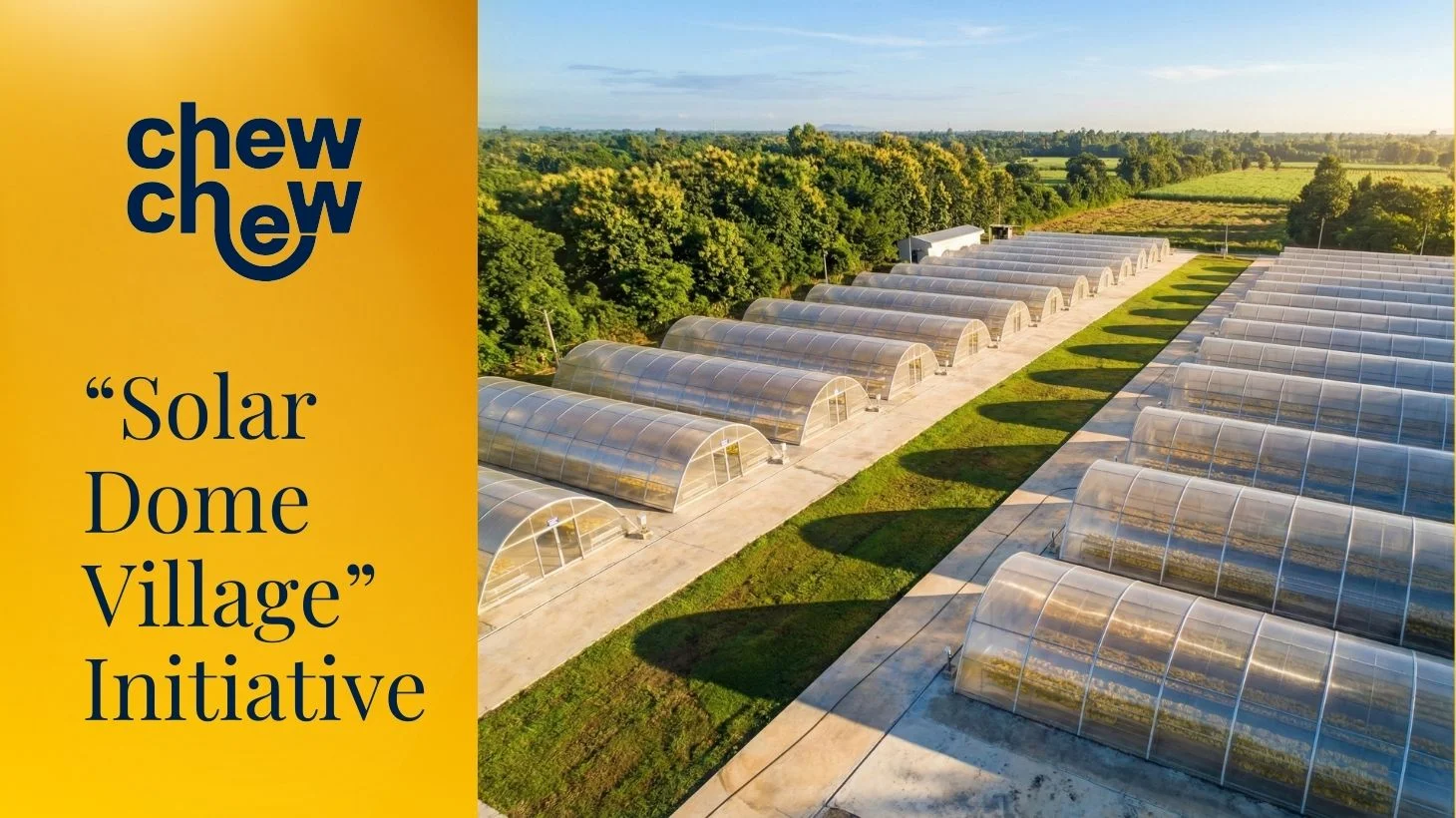
Chewchew has officially launched the Solar Dome Village Initiative, a community-based clean-energy project designed to modernize fruit drying processes while reducing environmental impact. The initiative focuses on installing solar-powered drying domes in local farming communities, enabling producers to reduce energy consumption by up to 80% while significantly improving product quality and operational efficiency
Advancing ESG Through Clean Energy and Responsible Production
The Solar Dome Village supports Chewchews' broader ESG commitments across three pillars: Environmental Sustainability, Social Empowerment, and Responsible Supply Chain Development.
1. Environmental Impact (E)
- 80% Energy Reduction: Solar domes replace fuel-based or electric dehydrators, lowering carbon emissions and operational energy use.
- Lower Waste: Controlled solar drying reduces post-harvest spoilage, helping farmers minimize discarded produce.
- Cleaner Processing: Enclosed systems protect fruits from dust and contamination, aligning with global food-safety standards.
2. Social Impact (S)
- Income Stability for Farmers: With faster drying times and consistent product quality, local growers gain access to more reliable and higher-value markets.
- Knowledge Transfer: Chewchew provides hands-on training in dome operation, food safety, and sustainable processing methods.
- Community Infrastructure: Solar Domes operate as shared facilities, increasing collective capacity and promoting community resilience.
- nd improves directional stability when you miss the sweet spot compared to low-MOI heads.
3. Governance & Responsible Supply Chain (G)
- Transparency in Production: Improved drying consistency allows Chewchew to maintain clearer traceability and standardized quality across the supply chain.
- Long-Term Partnerships: The initiative fosters stable procurement relationships with growers, supporting ethical sourcing practices.
- Compliance Readiness: Solar Dome environments follow modern standards for hygiene and food safety, contributing to export compliance.
Why Solar Dome Technology Matters
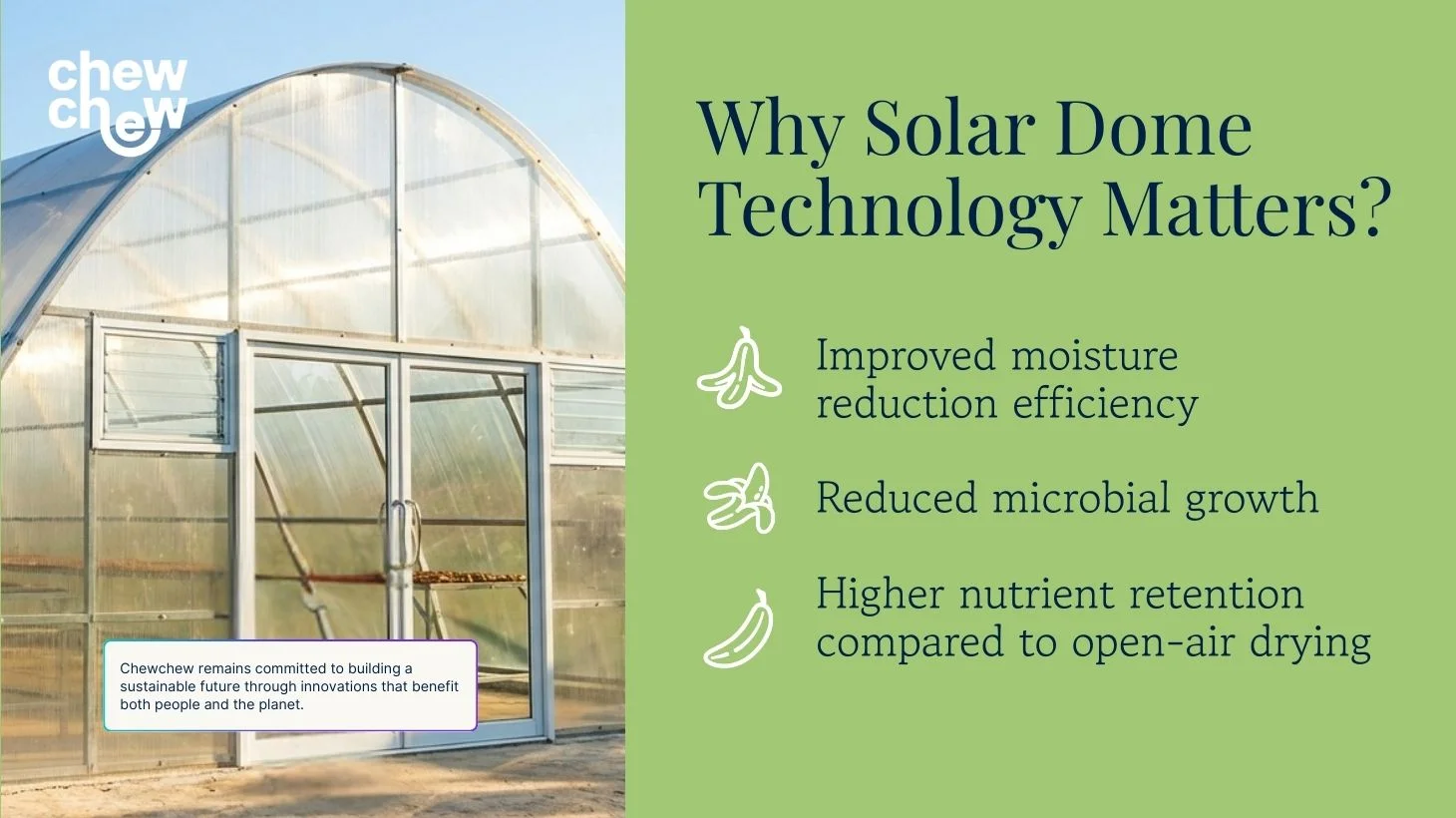
Solar domes create a controlled-temperature environment that accelerates dehydration, preserves nutrients, and reduces contamination risks. Research in agricultural engineering highlights that controlled solar drying results in:
- Improved moisture reduction efficiency
- Reduced microbial growth
- Higher nutrient retention compared to open-air drying
These advantages translate directly into higher-value dried fruit products and more predictable outputs for farmers.
Driving Long-Term Sustainability in Thailands Agricultural Sector
The Solar Dome Village is part of Chewchews' long-term plan to reshape rural fruit processing with scalable, low-emission technology. By empowering communities with modern tools and training, the initiative supports:
- Increased productivity
- Higher-quality raw material supply
- Stronger community self-reliance
- Sustainable agricultural value chains
Chewchew aims to expand the Solar Dome Village model to additional regions, creating a network of clean-energy processing hubs that uplift both economic and environmental outcomes.
About Chewchew ESG Commitments
Chewchew remains committed to building a sustainable future through innovations that benefit both people and the planet. The Solar Dome Village Initiative underscores the company's mission to create transparent, ethical, and environmentally responsible fruit-processing ecosystems in Thailand.